
build your ecg confidence
ECG Academy
ECGs do not have to be confusing. This academy is a complete system designed to help you interpret ECGs with confidence and practise more safely.
Write your awesome label here.
Video Lessons
Over 4.5 hours of ECG video lessons.
Chapter PDFs
57+ pages of downloadable ECG learning resources.
Test Your Knowledge
100+ questions to test and reinforce your learning.
Prove your Progress
Earn CPD certificates as you progress through the academy.
Want more than just a course?
It's a system designed to continually improve your ECG interpretation:
01 Learn
02 Practice
03 Apply
All for £6.99 / month
Inside the ECG Academy...
See the ECG Academy in action
Built for All Ambulance Clinicians
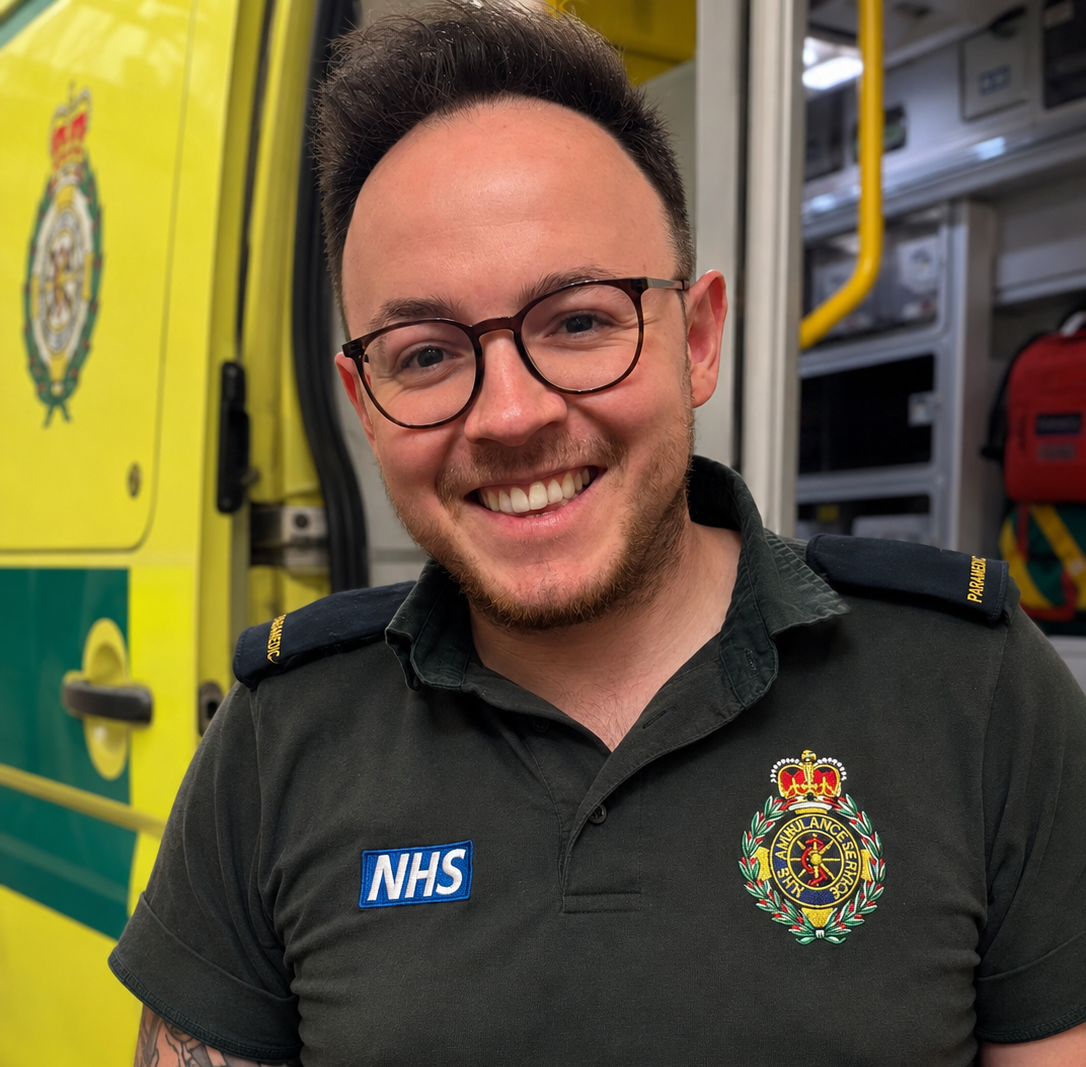
Learn From a Paramedic Perspective
Frequently asked questions
1. What should I look for in an ECG course for paramedics?
A good ECG course for paramedics should provide more than a list of patterns and criteria to memorise. Look for structured teaching that explains the physiology behind the ECG, develops a systematic approach to interpretation and relates ECG findings back to clinical practice.
For paramedics and ambulance clinicians, it can also be helpful to choose ECG training that considers the pre-hospital environment and the decisions clinicians make when assessing patients.
The PocketClinician ECG Academy has been developed from a UK paramedic perspective, combining structured video teaching, ECG examples, quizzes and assessments to help you develop both your knowledge and your approach to ECG interpretation.
For paramedics and ambulance clinicians, it can also be helpful to choose ECG training that considers the pre-hospital environment and the decisions clinicians make when assessing patients.
The PocketClinician ECG Academy has been developed from a UK paramedic perspective, combining structured video teaching, ECG examples, quizzes and assessments to help you develop both your knowledge and your approach to ECG interpretation.
2. What is the best way to learn ECG interpretation as a student paramedic?
The best way to learn ECG interpretation as a student paramedic is to build your knowledge progressively and combine theory with ECG examples, rather than trying to memorise every abnormality at once.
Start by understanding cardiac anatomy, the conduction system and how electrical activity produces the waves and intervals seen on an ECG. From there, develop a consistent method of ECG interpretation before progressing into rhythms, conduction abnormalities, myocardial ischaemia and other ECG presentations.
The PocketClinician ECG Academy follows this structured progression and is designed to complement the ECG learning student paramedics encounter at university and during clinical placement.
3. Where should I start when learning ECG interpretation?
When learning ECG interpretation, start with the foundations: cardiac anatomy, electrical conduction, depolarisation and repolarisation, and how these processes create the waves and intervals seen on an ECG.
From there, learn what a normal ECG looks like and develop a systematic approach to assessing areas such as rate, rhythm, intervals and cardiac axis.
Once you've established those foundations, you can progressively introduce ECG abnormalities including AV blocks, bundle branch blocks, myocardial ischaemia, arrhythmias and chamber abnormalities. This progressive approach forms the basis of the teaching within the ECG Academy.
4. Can I learn ECG interpretation online?
Yes. ECG interpretation can be learnt online, particularly when an online ECG course combines structured teaching with visual ECG examples, clear explanations and opportunities to test your understanding.
Learning online also allows you to pause more difficult topics, revisit previous lessons and progress at your own pace rather than trying to understand ECG interpretation in a single study session.
The PocketClinician ECG Academy is fully online and self-paced, allowing student paramedics, paramedics and ambulance clinicians to work through their ECG learning around university, clinical placement, ambulance shifts and other commitments.
5. What topics should an ECG interpretation course cover?
A comprehensive ECG interpretation course should start with the foundations, including cardiac anatomy and physiology, the cardiac conduction system, ECG waves and intervals, lead placement, rate, rhythm and cardiac axis.
It should then progress into clinically important ECG abnormalities, including AV blocks, bundle branch and fascicular blocks, myocardial ischaemia and infarction, arrhythmias and chamber abnormalities.
Just as importantly, an ECG course should teach a systematic approach to interpretation so that you're not relying solely on recognising individual patterns. The ECG Academy is structured around this progression, taking learners from the fundamentals into increasingly detailed ECG interpretation.
6. How long does it take to learn ECG interpretation?
There is no fixed amount of time it takes to learn ECG interpretation. The fundamentals can be learnt relatively quickly, but developing a deeper understanding and becoming more consistent at ECG interpretation develops progressively through continued learning, exposure and practice.
Rather than trying to learn every ECG abnormality at once, it can be more effective to build your knowledge systematically and revisit more difficult topics as your understanding develops.
The ECG Academy is self-paced, allowing you to work through the course at a speed that suits your existing ECG knowledge, university studies, clinical placements or workload.
7. Is there an ECG course specifically for student paramedics?
Yes. The PocketClinician ECG Academy is an online ECG course developed with student paramedics, paramedics and ambulance clinicians in mind.
Rather than approaching ECG interpretation purely from a theoretical perspective, the teaching is delivered from a UK paramedic perspective, helping to make complex ECG concepts understandable and relevant to pre-hospital clinical practice.
Student paramedics can use the ECG Academy alongside university teaching and clinical placement to build a structured understanding of ECG interpretation, test their knowledge through quizzes and revisit topics that need further development.
8. Is the ECG Academy suitable if I already understand the basics of ECG interpretation?
Yes. Although the ECG Academy begins with the foundations, it progresses beyond basic ECG interpretation into more detailed abnormalities and concepts.
This means the course can be used by learners who are relatively new to ECGs as well as paramedics and ambulance clinicians who already interpret ECGs but want to consolidate their knowledge, revisit weaker areas or develop a deeper understanding of why particular ECG changes occur.
Because the ECG Academy is self-paced, you can spend more time on the topics that are most relevant to your own learning and development.
9. Does the ECG Academy include ECG quizzes and CPD certificates?
Yes. The ECG Academy includes quizzes and assessments designed to test your understanding as you progress through the course rather than relying solely on passive video learning.
These assessments provide opportunities to check your ECG knowledge, consolidate what you've learnt and identify topics that you may want to revisit.
The ECG Academy also includes CPD certificates at key stages of the course, providing evidence of your continued professional learning and development.
10. What is included in the PocketClinician ECG Academy?
The PocketClinician ECG Academy is a structured, self-paced online ECG interpretation course designed for student paramedics, paramedics and ambulance clinicians.
The Academy includes video teaching covering ECG interpretation from the foundations through to more advanced topics, alongside ECG examples, supporting learning resources, quizzes, assessments and CPD certificates.
The course is taught from a UK paramedic perspective and can be completed at your own pace, allowing you to revisit previous lessons whenever you want to consolidate or refresh your ECG knowledge.
Ready to Build Your ECG Confidence?
Created with